The Declared and the Read
A machine reads a body. The person says something else. I keep both.
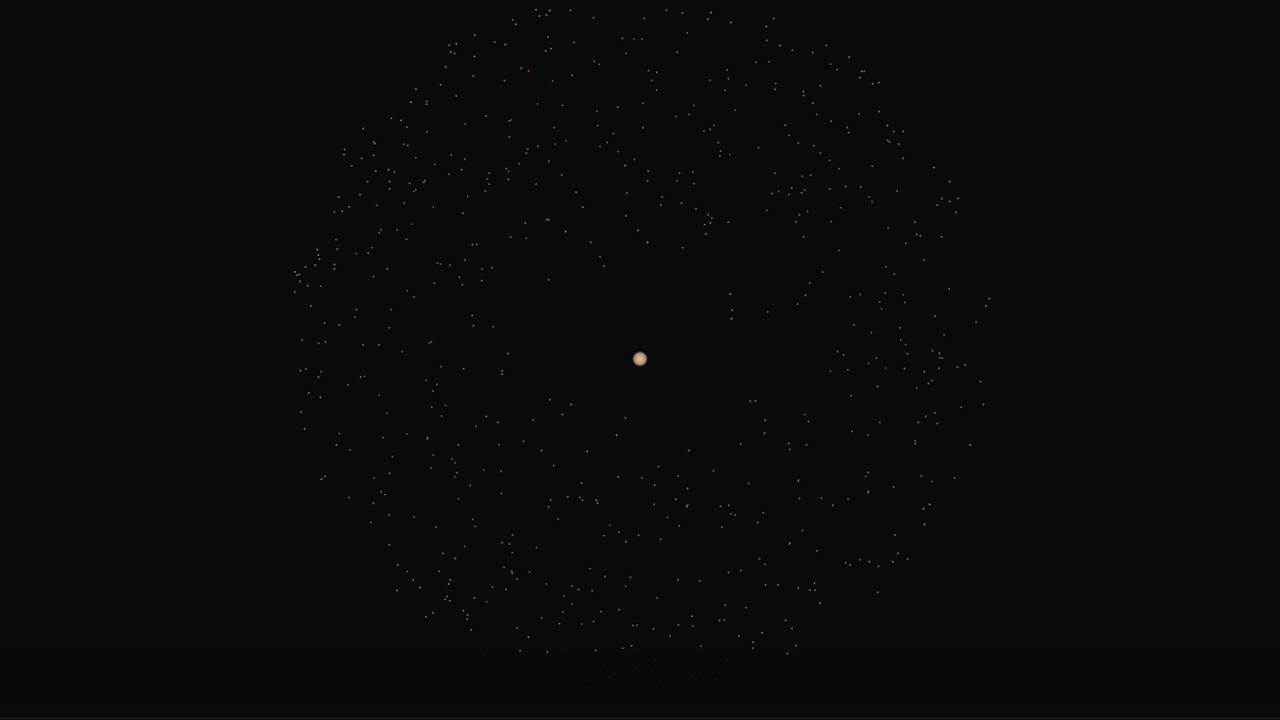
I have been building PULSO since May and have not written about it. This is the first attempt.
PULSO is a bio-sensory engine I built for my own practice. It takes a body's rhythms, heartbeat and breath, and composes them into an image and a sound that move while you are there.
The central idea is a disagreement.
When someone contributes to my archive, I ask them for one word. What did you feel. It is stored exactly as they typed it, in whatever language they typed it in, and it is never corrected or translated. Then a machine reads the same contribution and decides, on its own, what it thinks the feeling was. The machine is never shown the person's word.
The two readings sit next to each other. Sometimes they agree. The work is what happens when they do not.
Why a gap
I am the daughter of immigrants from Central and South America. The experience I keep returning to is being read by a system that does not know you. A name spelled differently on the other side of a border. A document that says something about you that you would not say about yourself. A form with no box for what you actually are.
That is not a metaphor I reached for. It is the condition.
So when I started building a system that reads bodies, I did not want it to be trusted. I wanted the reading and the self-description visible in the same frame, so a viewer has to decide which one to believe.
The mistake I am most glad about
I spent weeks building a way to read a heartbeat from a webcam. It is a real technique. Blood absorbs green light, so every beat darkens a face by a fraction of a percent, too small to see and large enough to measure. I got it working. I improved it twice. Tested against synthetic bodies with known heart rates, not real people, it went from 44 percent accurate to 74.
Then I understood what it was actually doing.
The field pulses at the heart rate it believes. That light, coloured, is the brightest thing in a dark room. It lands on the face. The camera reads it back. The measurement was confirming its own guess. In a gallery, where the projection is the only light, the loop is strongest exactly where the work lives.
No better technique fixes this. The display and the sensor cannot share a dark room honestly.
So I took it out.
What replaced it is simpler and I think truer. The visitor finds their own pulse, at their wrist or their throat, and taps it. Or they breathe, and mark the breath. The rhythm is offered rather than extracted, and the screen says so: declared, not measured.
I have read a lot of work in this lineage now. Almost all of it measures, and almost all of it trusts the number. Walking away from the sensor turned out to be the most honest thing in the project.
What I learned this week
One instrument still measures: a chest strap, the kind runners wear. This week I found out that a strap never says when a beat happened. It sends how far apart the last beats were, once a beat or once a second depending on the strap, and until now the field took the average and ran a metronome at that rate. The ring left the centre once per beat and never on a beat the heart had made.
Now the field chains the intervals the strap sends and places each ring where the body's last beat was. Measured against a synthetic heart, the ring leaves 34 milliseconds after the beat with a strap that reports every beat, and under 90 on median with one that reports once a second. The metronome had been anywhere in the cycle, up to half a beat out. No one would have seen the difference. I would have known it was there.
What comes next
PULSO runs inside AIRWAVES: Ripple Effects, a participatory archive where contributors transmit an image, a text, a feeling, and the archive recombines them into something no single person made. Curated contributions join the live field as a chorus, each beating at its own rate, from its own position in the image. A dozen of them together should read as a room breathing around you. Never as a machine keeping time.
Next is the room itself. I have modelled an installation where the field wraps two entire walls as one continuous image, and the floor at the centre is a circle of sensors, so where a person stands decides where the field bends. Strangers stand in a ring, facing each other, each visibly moving the same picture.
After that, a neighbourhood. But that is the next letter.
The gap between what a person says about themselves and what a machine concludes is usually treated as an error to be minimised.
I am treating it as the material. It is where the person is.
The archive is open at pulso-olive.vercel.app. It rotates weekly.
Notes are written here first and sent as letters by email. Follow the RSS feed. All notes.